

What is Edge Artificial Intelligence (AI) – and why is it needed?
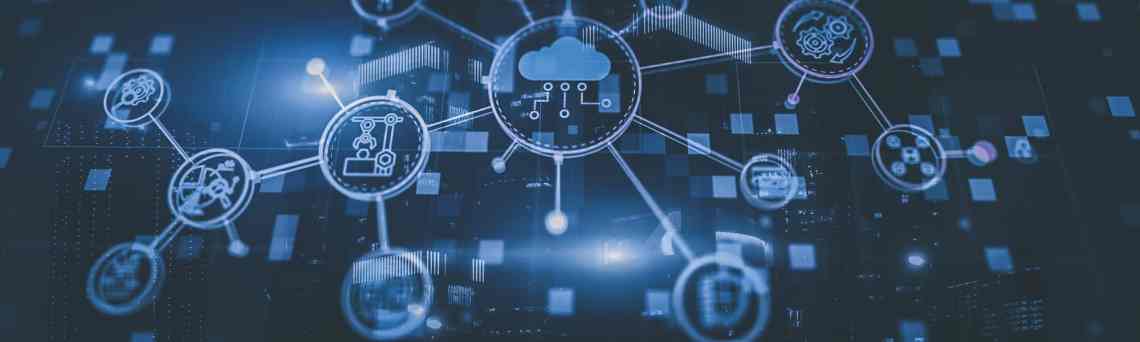
Edge AI enables data analysis near its source, such as cameras on production lines that detect faults in real-time. This reduces latency for faster decisions, crucial for self-driving cars and factory robots. It also lowers costs and power use by minimizing cloud reliance, enhancing security as most data remains local. An example of its use is in autonomous robots, which analyze data from onboard sensors for safe operation.
AIoT: When AI Meets the Internet of Things
While IoT provides data, Artificial Intelligence acquires the power to provide for responses – offering the opportunity for both creativity and the context to drive further actions; as the data is delivered and analysed with AI, businesses can make informed decisions. AI IoT succeeds in providing the following :-
- Management, analysation and provision of meaningful insights
- Fast and accurate analysis
- Localised and centralised intelligence
- Confidentiality and data privacy
- Maintenance of security against data attack
The Benefits of AI Enabled IoT
Combining IoT & artificial intelligence leads to a broad range of benefits for both companies and consumers alike – such as proactive intervention, a more personalised experience and intelligent automation. The following are some of the business benefits that can result through combining the technologies :-

Boosting Operational Efficiency
AI in IoT processes continuous data streams and uncovers hidden patterns. Machine learning with AI predicts operational conditions and identifies optimal parameters. Intelligent IoT reveals redundant processes and optimizes tasks to boost efficiency.

Eliminates Costly Unplanned Downtime
Predictive maintenance using AI-enabled IoT can foresee equipment failures in sectors like offshore oil & gas and industrial manufacturing. This allows for scheduled maintenance, avoiding costly unplanned downtime.

Increase IoT Scalability
IoT devices vary from mobile gadgets to low-end sensors. Typically, IoT setups use sensors to generate vast data. An AI-driven IoT ecosystem analyses and summarizes this data, reducing its volume for easier management and scalability, enabling multiple devices to connect.

Better Risk Management
Pairing AI with IoT enables businesses to predict and manage risks, automating prompt responses. This helps in handling financial loss, employee safety, and cyber threats more effectively.

New and Enhanced Products & Services
NLP is improving human-device communication. IoT and AI can create new products or enhance existing ones by quickly processing and analysing data.

There are several different types of AI, which can be broadly categorized based on their capabilities and the approach used to create them. Here is an overview of the main types of AI.

AI is having a profound impact on a wide range of industries, from healthcare and transportation to military and automation. It is changing the way we work and live.

The hardware required to use AI can vary depending on the specific AI application. Some AI algorithms are computationally intensive and require powerful hardware to run effectively.
BVM and AI: How to bring an Edge AI solution to market
- Development kits to help test and prototype your edge AI solution are readily available, but DEV Kits are rarely suitable for use in the environment where they will ultimately be deployed.
- A purpose-built industrial-grade AI system based on Nvidia Jetson, Intel Movidius, or a high-end GPU, will be more appropriate and will offer more reliable long-term operation.
- Our edge AI systems are designed for use in environments where shock, vibration, or extreme temperatures can be a problem, and will run 24/7 for many years.

AI Technologies
Artificial Intelligence (AI) is a method of using computers for perception, logic and learning. AI uses machine learning so that AI system performance improves over time and with more data analysis. This is achieved using Deep Learning algorithms based on neural networks which connect inputs and outputs in a similar way to the way brain works. Problem solving is learnt by the system itself and not hard coded by computer technologists. Deep Learning is used to Train the AI systems by providing data repeatedly to hone the system’s ability. When the AI system is trained it works to achieve the end goal which is to perform analysis or decision making.
Artificial Intelligence is achieved by using systems with a combination of high performance scalable processors such as the Intel Xeon; FPGAs (Field Programmable Gate Arrays); Vision Processing Units (VPUs) and Neural Network Processors (NNPs).
Machine Learning

Machine Vision

Computer Vision

AI Hardware Accelerators
GPU | CPU | VPU | FPGA
An AI accelerator is a kind of specialised hardware accelerator or computer system created to accelerate artificial intelligence apps, particularly artificial neural networks, machine learning, robotics, and other data-intensive or sensor-driven tasks. They usually have novel designs and typically focus on low-precision arithmetic, novel dataflow architectures or in-memory computing capability.
NVIDIA: Jetson (GPU)

Nvidia Jetson comprises embedded boards optimized for machine learning. Models like TK1, TX1, and TX2 utilize Nvidia’s ARM-based Tegra processors, offering energy efficiency and AI acceleration.
The NVIDIA JetPack SDK is a vital toolkit for developing AI apps on Jetson, featuring TensorRT, cuDNN, CUDA Toolkit, VisionWorks, GStreamer, and OpenCV on L4T with an LTS Linux kernel. It provides the latest OS, libraries, APIs, samples, documentation, and tools for developers.
CPU + GPU Computing

A Graphics Processing Unit (GPU) is a specialized chip that rapidly renders images and accelerates tasks like encryption and AI. Essential for supercomputing and data centers, GPUs have driven the AI boom and advanced graphics in gaming and professional applications.
GPUs outperform CPUs in processing large data blocks due to their parallel architecture. They’re commonly used in supercomputing, video processing, and AI training. NVIDIA GPUs feature CUDA Cores, which are designed for executing code efficiently.
Vision Processing Unit (VPU)
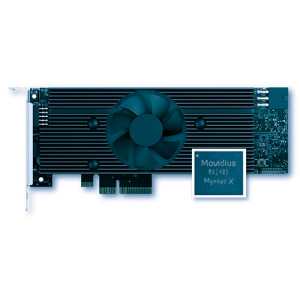

A vision processing unit (VPU) is a microprocessor that accelerates machine vision tasks. It captures visual data from cameras and excels at parallel processing with low power consumption. VPUs efficiently run algorithms such as CNNs and SIFT, focusing on on-chip data flow while minimizing off-chip buffer use.
Field-Programmable Gate Array (FGPA)


A field-programmable gate array (FPGA) is a customizable integrated circuit that can be programmed post-manufacturing. FPGAs offer flexibility and compatibility with CPUs, GPUs outperform them in parallel processing and floating-point tasks. FPGAs are less suitable for technologies like self-driving cars and deep learning.


AIoT Ready Hardware
Like most applications that BVM meet, where IoT based projects are concerned – each application demand will differ from the next. So we can meet these differing needs, and through the support of our OEM partner channel, BVM have built (and continue to expand) a portfolio of product to scale for computing efficiencies required around both Edge based PC’s – and Edge servers to provide for reliable performance solutions.
All our solutions are provided on industrial lifetime availability programs – so on a minimum of 3-5 years
AIoT Edge Devices – High Performance Mini PCs

Our solutions support applications like device condition monitoring for predictive maintenance or network anomaly detection, while BVM systems provide powerful CPUs capable of running multiple applications at once..
Edge Computers – High Performance Computers

BVM’s edge computers put you in control of your industrial IoT solutions, letting your applications process, store, and manage data directly on-site, saving time, cutting bandwidth, and improving performance.
Low Powered, Ultra Compact Computers

Ultra Compact Industrial Computers, IoT Controllers and Gateways connect devices and sensors to each other and the cloud, providing powerful processing, memory, and storage close to the data.
Deep Learning Computers / Servers

While GPU-accelerated hardware is key for AI and deep learning, BVM offers a range of solutions tailored to the different needs of development, training, and inferencing, covering every performance and budget requirement.
AI Accelerator Cards

BVM offers a wide range of Industrial AI accelerator cards for machine vision and AI applications, integrating VPUs, FPGAs, or GPUs while keeping ruggedized designs intact.
Motherboards and SBCs

Industrial and embedded boards provide the backbone for industrial systems, offering long-term availability, revision control and wide operating temperature ranges.
GPU/VPU Accelerated Computers

BVM offers a wide range of rugged industrial GPU-accelerated solutions for machine vision and AI, integrating VPUs or GPUs while still allowing fanless designs.
AI Ready Panel PCs

AI-ready Panel PCs deliver powerful processing, enhanced graphics, and hardware-accelerated video to handle advanced imaging and machine learning applications at the edge.
We like to make life easier ….
Our technical & commercial team members will always provide you with valuable but impartial advice around the products and services that BVM supplies. With their collective backgrounds, they’ll provide you with the benefit of their knowledge and experiences when & where you need it. We’ll always help you in the first instance and get back to you when additional information is required.
You can 📞 Call us on +(0) 1489 780 144 and talk to one of the team or 📧 E-mail us at sales@bvmltd.co.uk